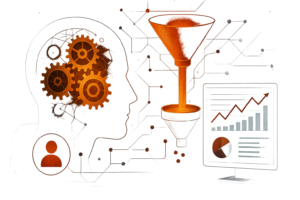
Visible Control vs Invisible Trust
If you run a business long enough, you’ll eventually face this tension.
Do you build systems that give you visible control, or do you build a business that earns invisible trust?
Most leaders don’t realize when they’ve shifted too far in one direction. They start installing dashboards, tracking metrics, adding tools, tightening processes, and measuring everything. On the surface, it feels responsible. It feels like leadership.
But something strange can happen along the way.
The business becomes extremely good at measuring activity, while quietly becoming worse at building trust.
This is one of the most common operational imbalances we see when talking with business owners.
Understanding the Difference
Visible control is what you can see inside the business.
Dashboards.
Analytics reports.
Sales targets.
Process documentation.
Automation systems.
These things matter. They help a company operate efficiently and maintain accountability.
But trust lives somewhere else entirely.
Trust lives in the mind of the customer.
It shows up when a customer recommends your business without being asked. It appears when someone chooses your company over competitors because they believe you will deliver what you promise. It grows when your brand communicates clarity, competence, and consistency.
The problem is that trust is harder to measure. It is not visible on a dashboard.
So many companies slowly start optimizing for what they can measure instead of what actually builds the business.
How Businesses Drift Into Visible Control
This shift rarely comes from bad leadership. It usually comes from growth.
As businesses scale, leaders add tools to maintain control. CRM systems. Reporting software. automation platforms. Operational dashboards.
Every tool promises greater visibility and efficiency. And often they deliver exactly that.
But if the leadership team becomes too focused on internal measurement, something important begins to fade: the external experience.
Customers don’t see your dashboards.
They see your website.
They feel your systems.
They experience your responsiveness.
When internal control improves but external trust stagnates, the business slowly begins to feel more mechanical and less intentional.
How Customers Experience the Difference
Imagine a customer comparing two companies online.
Company A has excellent internal systems. Their CRM is perfect. Their analytics are detailed. Their reporting structure is impressive.
But their website is outdated. Their messaging feels generic. The customer experience feels slightly confusing.
Company B may have simpler internal systems, but their message is clear. Their website is modern. Their process feels smooth and intentional.
The customer will almost always choose the business that feels trustworthy, even if the other company has stronger internal control.
This is why visible control alone does not build competitive advantage.
Before and After
When a business prioritizes visible control:
- Teams focus heavily on internal metrics
- Technology stacks grow larger and more complex
- Processes multiply but clarity decreases
- Customer experience receives less attention
When a business balances control with trust:
- Systems support the mission instead of dominating it
- Technology simplifies the customer experience
- Messaging becomes clear and confident
- Customers feel the business is intentional and reliable
The difference is alignment. Control should support trust, not replace it.
What Business Owners Can Do About It
The solution is not removing control. Businesses need systems and data. The key is remembering what those systems are meant to support.
Healthy companies regularly ask questions like:
- Do our systems make the customer experience easier or more complicated?
- Does our website clearly communicate the trustworthiness of our business?
- Are we measuring what truly matters to customers?
- Are we improving how people experience our brand?
When businesses bring attention back to trust, something interesting happens.
Technology becomes more purposeful. Marketing becomes clearer. Customers begin to feel the difference.
A Final Thought
Running a modern business requires systems. There is no avoiding that.
But systems should always serve something bigger.
Visible control keeps the business organized. Invisible trust is what actually keeps customers coming back.
The strongest companies understand how to balance both.
If you would like help reviewing your digital infrastructure, website, or systems to ensure they are building both control and trust in your business, feel free to reach out.